


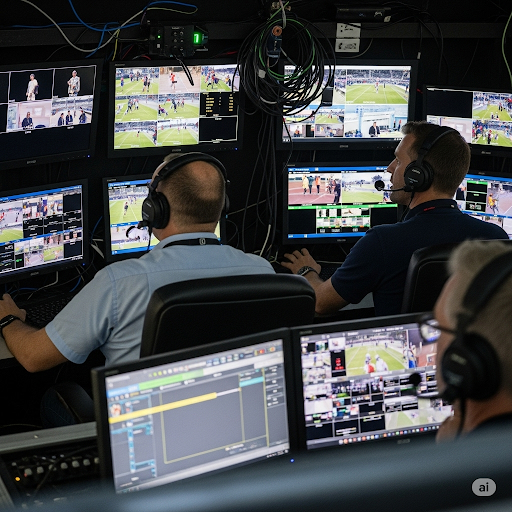
The Symphony of the OB Truck – Beyond Just Hearing!

Here at UTV, we're all about the future of television and research, and let me tell you, that future is live and loud! Especially out here on location, where the roar of the crowd, the whir of generators, and the sheer controlled chaos of an outside broadcast (OB) production can overwhelm the uninitiated. Gone are the days of a single, clear voice. Today, if you’re not adept at truly listening and contributing to our comms systems, you’re missing half the action – or worse, the critical cue that makes or breaks the broadcast!
So, what does it take for a crack OB crew – from the steadiest Cameraman to the lightning-fast Replay Operator, and the orchestrating Director – to not just survive, but thrive in this multi-layered auditory landscape? Pull up a chair (or a stool in the OB truck), grab your headset, and let’s break down the essential skill set you need to master the art of the comms system.
1. The Art of the Multi-Track Mind: Listening to More Than One Voice
This isn't just about having good hearing; it's about cognitive processing under immense pressure. Imagine a live football match: the Director is in your ear, the Vision Mixer is calling camera numbers, the Replay Operator is confirming clips, the Graphics Op is asking for data, and the Producer is shouting updates from the next desk. How does a Cameraman, for instance, discern the "Track shot from Camera 3" from the "Roll replay on Vision 1" while still framing the perfect shot?
* Active Filtering & Prioritization (The OB Brain's Noise Canceller): This is your brain’s built-in sound engineer. You need to train yourself to actively filter out ambient noise (crowd, wind, the guy eating crisps next to you) while focusing on the critical comms. For a Replay Operator, this means tuning out everything but the Director's specific request for a replay, while still monitoring the overall flow. It's about knowing who needs your attention now versus who can wait a beat.
* Contextual Awareness (Reading Between the Lines): A single word can have multiple meanings. Listening effectively means understanding the context of each communication. Is the Director saying "Cut to 2!" as an urgent command or as a pre-planned transition? Is the Assistant Director asking a question or confirming an action? Your brain needs to be a master of inference, especially when comms are clipped or rushed.
* Pattern Recognition (Anticipating the Director's Next Move): Over time, you’ll start to recognize communication patterns within your crew. Who speaks quickly when stressed? Who uses specific shorthand for urgent requests? The best Cameraman knows, even before the AD calls it, that the Director will want a wide shot after the goal. This subconscious pattern recognition dramatically speeds up your processing time and allows for proactive responses.
2. The Ad-Lib Advantage: Thinking (and Acting) on Your Feet
Outside broadcast is rarely about perfectly scripted interactions. In the fast-paced world of live events, things go wrong, unexpected moments happen, and plans change in an instant. This is where the power of ad-libbing – not just verbally, but in your actions – comes into play.
* Rapid Information Synthesis (Director's Instant Strategy): As the Director, you've just heard the pitch-side reporter's mic died, Camera 4 lost feed, and you need a shot of the coach now. Your ability to quickly synthesize this chaos, identify the core problem, and articulate new instructions coherently is paramount. This isn't about guesswork; it's about quick, logical deduction and immediate re-planning.
* Concise & Clear Articulation (Operator's Precision): Whether you're a Replay Operator confirming a clip is ready, or a Graphics Op stating a bug is loaded, every word counts. There’s no time for rambling or jargon. You need to distill complex thoughts or actions into clear, actionable, and easily understandable statements for the rest of the crew. "Replay ready, angle A, 15 seconds." That's it.
* Composure Under Pressure (The Unflappable Crew): The best OB crew members aren't just quick thinkers; they're calm under fire. Panic clogs the comms channels, both internal and external. For a Cameraman, keeping a steady shot even when the director is shouting conflicting instructions demonstrates composure. Maintaining a steady demeanor allows for clearer thought and more effective communication, even when the clock is ticking and multiple voices are vying for your attention.
* Anticipation & Pre-Visualization (The Proactive Crew Member): While you can’t script every live moment, you can certainly prepare for potential scenarios. The best Replay Operators are already cueing up potential replays even before the action finishes. The most experienced Cameramen are already thinking about the next possible shot. By mentally rehearsing different "what if" situations, you build a mental library of responses that can be quickly adapted when the unexpected inevitably happens.
3. The Unseen Architect: Systemic Understanding
It's not enough to just use the comms system; every crew member needs to understand its architecture, its quirks, and its limitations.
* Technical Familiarity (Knowing Your Gear): You don't need to be the comms engineer, but understanding the basics of your headset, talkback panel, or the routing of comms channels is crucial. Knowing how to adjust your own volume, switch between private lines, or troubleshoot a basic hum can save precious seconds in a critical situation. For a Vision Mixer, knowing which comms lines are active to which departments is fundamental.
* Protocol & Etiquette (The Unwritten Rules of the Truck): Every comms system has its unwritten rules of engagement. When to speak, when to be silent, how to acknowledge receipt of information ("Copy that, Director"). These aren't just polite suggestions; they are vital for maintaining clarity, avoiding information overload, and ensuring everyone hears the critical calls. "Director to All Comms" always takes precedence.
* Feedback Loop Optimization (Ensuring the Message Lands): Are you providing clear, concise feedback? Are you asking clarifying questions effectively? A comms system is only as good as the information flowing through it. Being a good participant in that feedback loop – confirming you've heard, understood, and are acting – enhances everyone’s ability to understand and react.
The UTV Takeaway: Beyond the Headset, It's About Synchronization
Mastering comms systems in 2025 for an OB crew isn't just about technical proficiency. It's about developing a profound level of cognitive agility, emotional intelligence, and proactive problem-solving. It’s about becoming a finely tuned orchestra, where every Cameraman, Replay Operator, and the Director himself, plays their part in a seamless, synchronized performance, ensuring every cue is heard, every action is understood, and the broadcast is nothing short of spectacular.
So, for all you aspiring broadcast pros out there, start honing these skills. The world is watching, and your ability to navigate the complex comms landscape of a live OB will define your success.
OB Crews – what are your golden rules for comms? Share your hard-earned insights with UTV in the comments below!
Damien Gonzalvers
University of Television


Comments